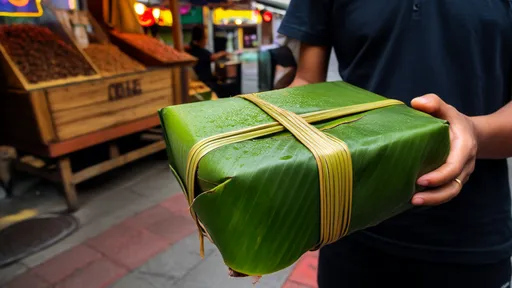
In the bustling streets of Bangkok, Jakarta, and Hanoi, a quiet revolution is taking place in the way food is delivered. Across Southeast Asia, where plastic waste from takeaway containers clogs canals and landfills, entrepreneurs and traditional vendors alike are turning to an ancient solution: banana leaves. What began as a grassroots movement has now evolved into a regional phenomenon, with startups and restaurants adopting this biodegradable alternative to plastic packaging.
The shift comes at a critical time. Southeast Asia is among the world’s worst contributors to ocean plastic pollution, with countries like Indonesia, the Philippines, and Vietnam ranking high in mismanaged waste. Single-use plastics, particularly from food delivery services, account for a staggering portion of this crisis. As urbanization and app-based food delivery surge, so does the demand for sustainable alternatives. Banana leaves, long used in traditional cooking and serving, are emerging as an unlikely hero in this fight.
Banana leaves are not just eco-friendly; they are deeply embedded in the region’s culinary heritage. For centuries, they have been used to wrap sticky rice, grill fish, or serve meals in rural communities. Their natural waxy coating makes them waterproof, while their sturdy structure can hold everything from curries to noodles without leaking. Unlike plastic, which takes centuries to decompose, banana leaves break down within weeks, enriching the soil instead of polluting it. This marriage of tradition and sustainability has caught the attention of environmentally conscious consumers and businesses.
One of the pioneers of this movement is a startup in Bali called GreenPack, which supplies restaurants with sterilized and cut banana leaf packaging. "We saw how much plastic waste was generated by tourism and food delivery here," says founder Made Sutarya. "Banana leaves grow abundantly in Indonesia, so why not use what’s already around us?" The company now serves over 200 eateries across the island, and its model is being replicated in Thailand and Malaysia. Similar initiatives, like Vietnam’s Leaf Republic, are experimenting with heat-sealed banana leaf containers for soups and broths, addressing one of the biggest challenges in plastic-free packaging: liquid dishes.
Yet, scaling up banana leaf packaging isn’t without hurdles. Unlike mass-produced plastic, banana leaves are seasonal and vary in size, requiring labor-intensive cleaning and processing. Some vendors also face skepticism from customers accustomed to the convenience of plastic. "At first, people thought it was unhygienic or messy," admits a street vendor in Manila who switched to banana leaves last year. "But when they see how it keeps the food fresh and aromatic, they come back." Education campaigns highlighting the health risks of plastic (especially when heated) have helped shift perceptions, as have government bans on single-use plastics in cities like Kuala Lumpur and Siem Reap.
The trend has also sparked innovation beyond traditional leaves. In Singapore, researchers are developing biodegradable coatings to extend the shelf life of banana leaf packaging, while startups in the Philippines are weaving leaves with other natural fibers for sturdier takeaway boxes. Even global fast-food chains are taking note: in 2023, a major burger franchise piloted banana-leaf-wrapped burgers in Thailand, citing customer demand for greener options.
Perhaps the most compelling aspect of this movement is its ripple effect. By creating demand for banana leaves, the packaging shift is supporting smallholder farmers who grow the plants. In rural Cambodia, where banana trees were previously grown mostly for fruit, farmers now sell leaves to packaging cooperatives at a premium. "This extra income helps send my children to school," says farmer Sok Vanny, one of hundreds benefiting from the new supply chains. Meanwhile, waste collectors report fewer plastic-clogged drains during rainy seasons in neighborhoods where banana leaf packaging has taken hold.
Critics argue that banana leaves alone can’t solve Asia’s plastic crisis—especially in urban areas where trees aren’t readily available. Some environmentalists advocate for broader systemic changes, like stricter plastic regulations and investment in recycling infrastructure. Yet, the banana leaf movement demonstrates how cultural wisdom can complement modern sustainability efforts. As one vendor in Jakarta puts it while wrapping satay in a fragrant leaf: "Our grandparents knew this was the way. Sometimes, the best solutions are the ones that have been here all along."
As Southeast Asia’s eco-conscious middle class grows, so does the potential for banana leaf packaging to go mainstream. With tech platforms now allowing customers to filter for "zero-plastic" delivery options, and governments offering tax incentives for businesses that adopt biodegradable packaging, what started as a niche trend is inching toward a new normal. The humble banana leaf, once a symbol of traditional village life, may soon become the emblem of a plastic-free future for the region’s megacities.
By /Jul 7, 2025
By /Jul 7, 2025
By /Jul 7, 2025
By /Jul 7, 2025

By /Jul 7, 2025

By /Jul 7, 2025

By /Jul 7, 2025
By /Jul 7, 2025

By /Jul 7, 2025

By /Jul 7, 2025

By /Jul 7, 2025

By /Jul 7, 2025

By /Jul 7, 2025

By /Jul 7, 2025

By /Jul 7, 2025

By /Jul 7, 2025

By /Jul 7, 2025

By /Jul 7, 2025

By /Jul 7, 2025

By /Jul 7, 2025
